

Retirement, as it turns out, didn’t really suit gardening legend Paul Hansord!!
After stepping away from work, he found himself getting bored and looking for something new to occupy him… something that would pique his curiosity. And that “something” was compost.
Before long, he was on a plane to Sri Lanka and India, spending weeks visiting coir manufacturers and trying to work out what separated the good from the bad.
This curiosity has turned Eazy Grow into a promising name in compost, and has led to an exhaustive understanding of washing, grading, fertiliser particle sizes, compression, air porosity, and also, quite a lot of experimentation.
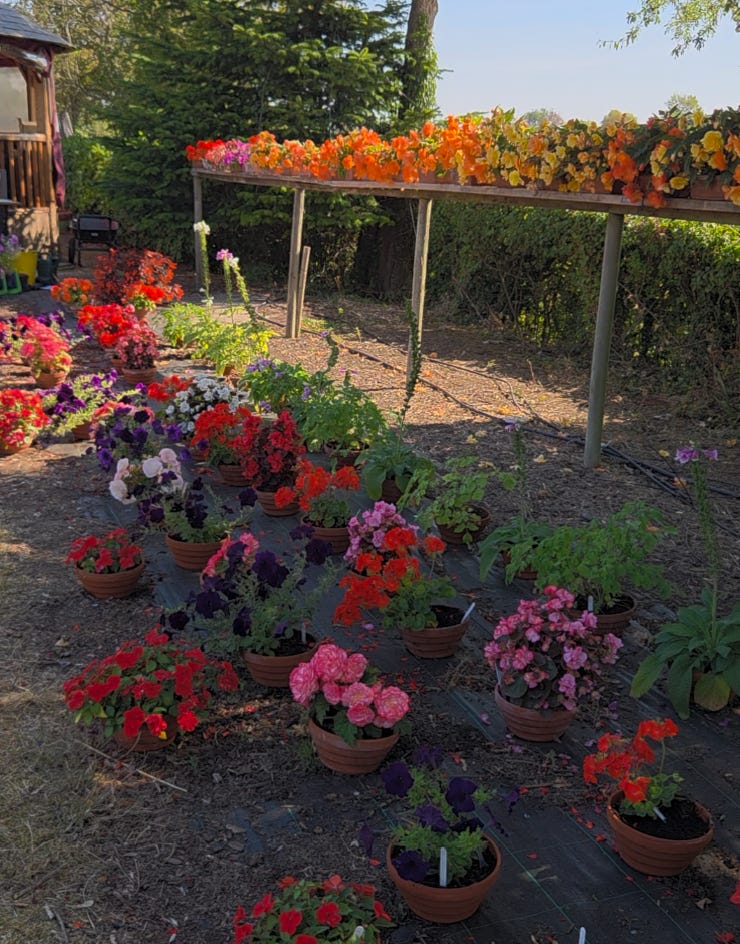
Paul Hansord’s journey into coir starts with a trip to India
His first challenge was finding the right manufacturer. Some of the huge operations he visited were impressive, but he suspected his relatively small requirements wouldn’t be particularly interesting to businesses shipping hundreds of lorry loads at a time. Eventually, he found a younger company whose approach he liked and decided to work with them.
The visits also taught him that coir is not just one uniform product. Different manufacturers were processing it in very different ways. Some washed it thoroughly; others reused the same washing water repeatedly. Some graded it carefully, while others left much more fine material in the finished product.
This was all important because those tiny particles affect the structure of the compost. Paul’s view is that if too many fines remain, the mix becomes dense and loses the air spaces roots need.
“You have to take the fines out,” he explains. “It adds to the price, but you need the fines out. Otherwise, you don’t get the structure and the air.”
Eazy Grow therefore specifies how its coir is stored, washed and graded, with a maximum amount of fibre also controlled depending on the intended mix.
Then came the fertiliser problem
Coir itself was only part of a big puzzle. Many commercial growers buy coir without added fertiliser because they prefer to control nutrition themselves through liquid feeding. That makes a lot of sense in a professional growing environment, but it isn’t that helpful for the home gardener who expects to open a bag of compost and start planting.
Paul began experimenting with fertilisers, including early trials using a supplier in China. He had actually ordered his first consignment when the Chinese government imposed an export ban on fertiliser, sending him right back to the drawing board.
European alternatives followed, although at considerably higher cost, and another problem soon appeared: standard controlled-release fertiliser granules could be too large for the highly compressed coir blocks.
If the granules crack during compression, the fertiliser can release too quickly, potentially exposing roots to excessive nitrogen in one hit. So began another round of testing…
Today, Eazy Grow uses several fertiliser formulations and very small controlled-release granules, chosen partly because their size allows them to distribute more evenly throughout the compressed material.
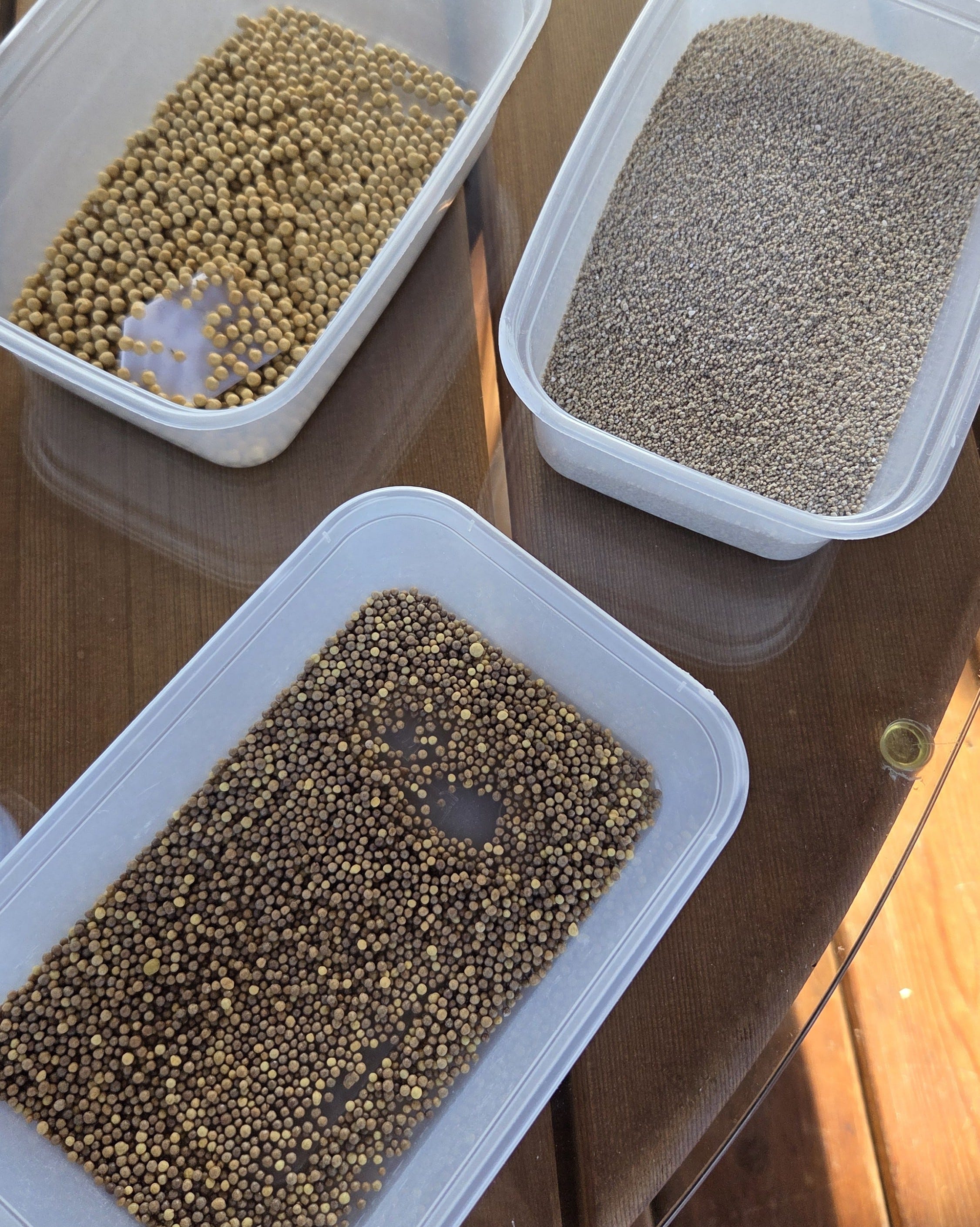
What does controlled-release actually mean?
This is an area where compost packaging can make everything sound mysterious, but the principle is, in-truth, quite straightforward.
Controlled-release fertilisers use coatings designed to release nutrients gradually in response to factors such as water and temperature. Different formulations can be designed to feed over different periods, from a few months to much longer.
Paul is continually testing alternatives, especially as the industry moves away from traditional plastic coatings.
“The beauty of doing the trials” is how Paul describes it. The formulation isn’t treated as finished forever; products are tested, compared and reconsidered as new materials become available.
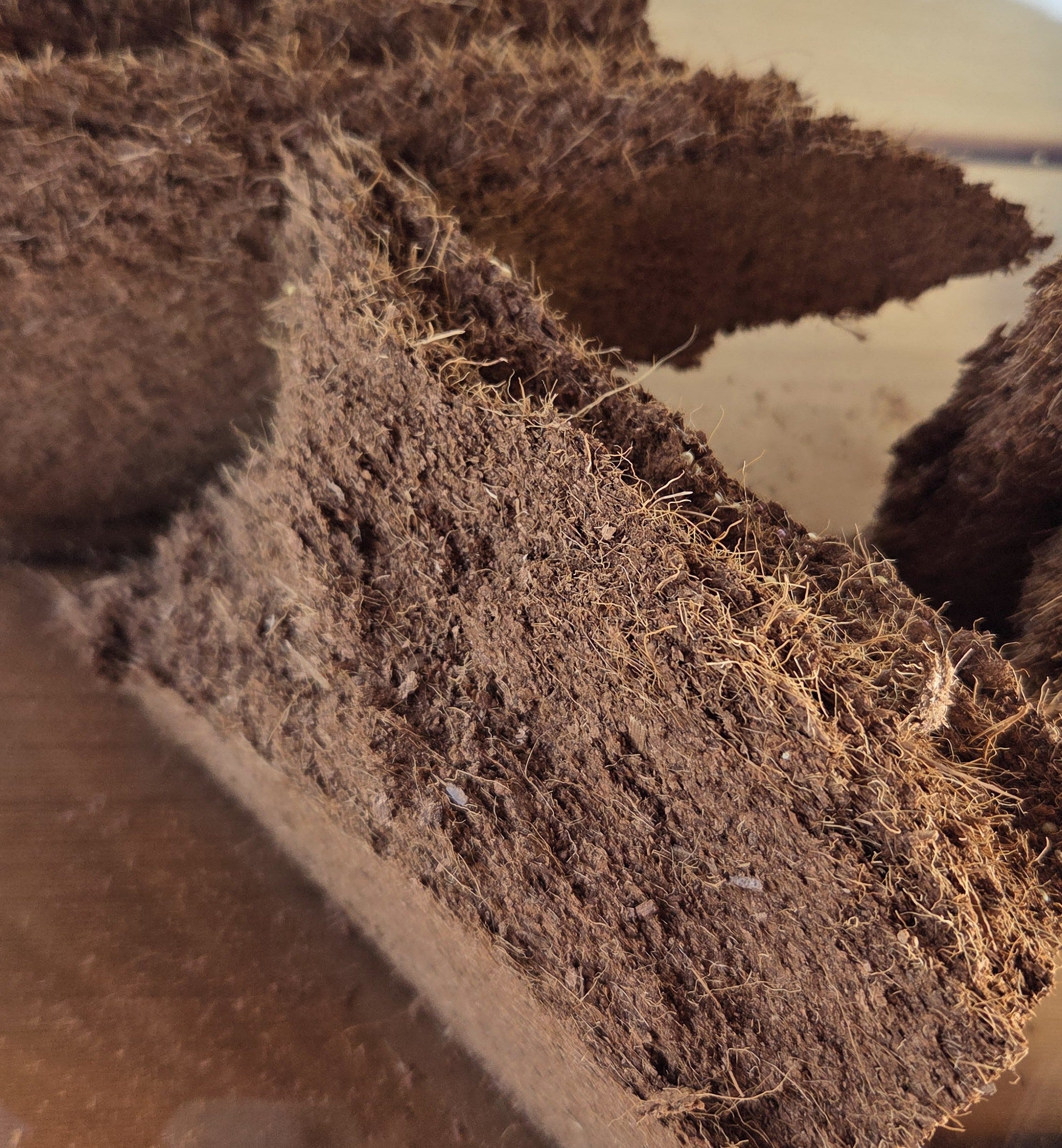
Why compress compost?
You might notice that Eazy Grow looks different from conventional bagged compost.
The coir arrives compressed into compact blocks which expand when water is added. Paul says that compression allows roughly four times as much growing medium to fit into a lorry compared with conventional loose compost, which counts when your raw material starts life thousands of miles away.
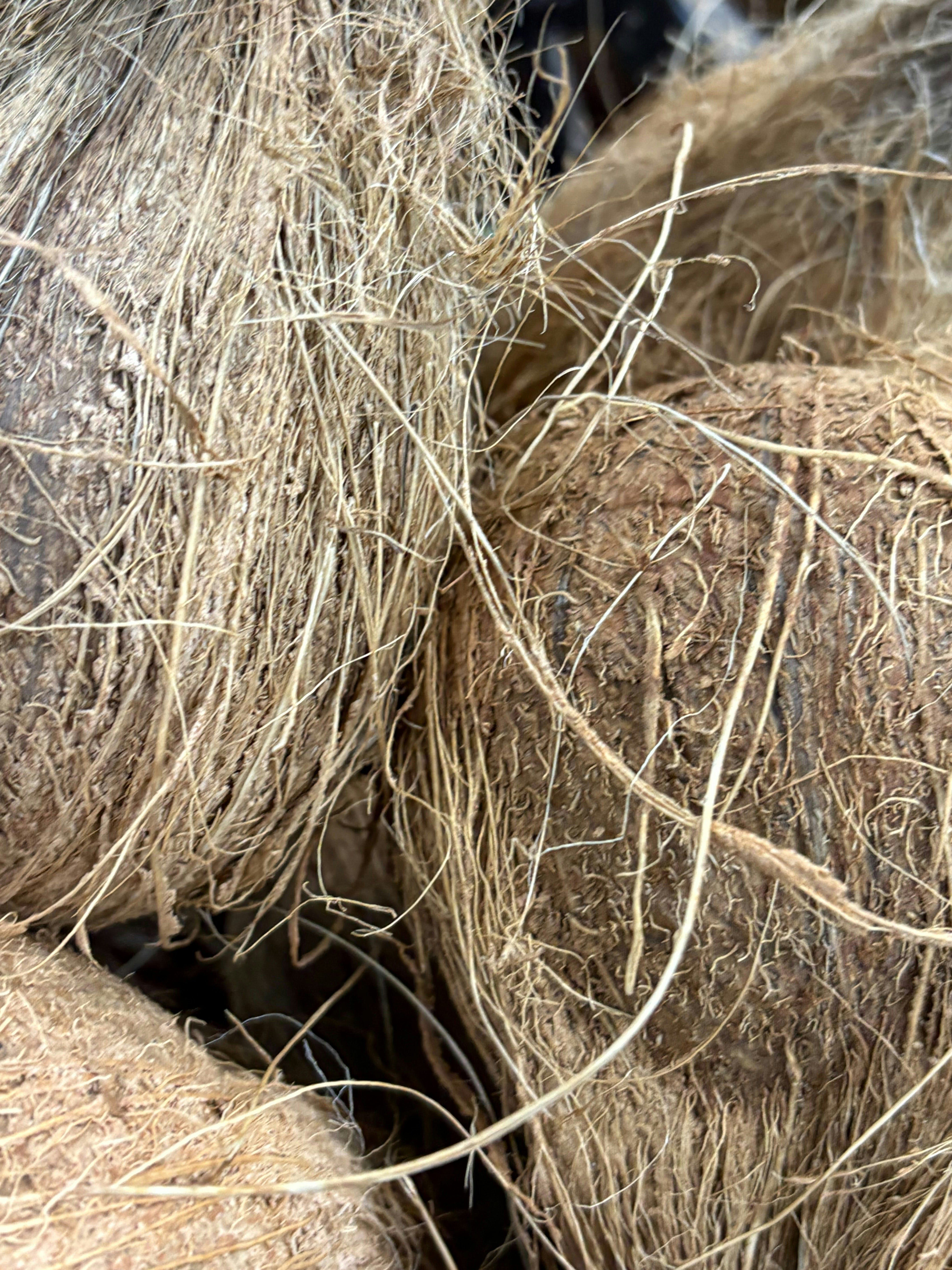
The coir itself is a by-product of coconut production rather than a crop Paul says is being specifically planted for horticultural coir. Coconut husks have traditionally been used for products including mattresses and mats, while large quantities were previously left in heaps or burned.
The nitty gritty of the processing is still important, though - not all coir is made equal. Coir produced nearer the coast can contain more salt and therefore require more washing than material grown inland. Commercial growers may go a step further and use buffered coir, which undergoes additional treatment.
Water from processing also comes into the equation. Paul says the manufacturer he works with reuses washing water for coconut trees, while rainwater from building roofs is collected into large storage tanks for the processing operation. The coir is traditionally dried naturally in the sun, although unpredictable monsoon conditions have prompted some producers to introduce covered drying areas.
Experimenting with the help of commerical growers
A really interesting part of Eazy Grow’s trials is that Paul isn’t only testing the material in neat little demonstration pots. At the time of our conversation, around 14 commercial growers were involved in trials, testing different formulations and treatments across different crops.
This happened partly by accident. Paul still had connections with lily breeders and growers from his previous horticultural career. When one grower saw lilies performing particularly well in coir, interest followed. Eazy Grow now supplies coir to cut-flower lily growers in Lincolnshire, and Paul says some have been experimenting with reusing the same material for successive crops.
Structural longevity is something he sees as an important advantage of coir. One grower, he says, had reached a third lily crop in the same material.
There have also been interesting observations around watering. Paul says some commercial growers have reported using less water with coir, particularly when material becomes dry, because coir rewets readily. Peat can become difficult to rehydrate once very dry, causing water to run through or off rather than soaking straight in.
For home gardeners, though, he is more cautious about making sweeping claims. From his own trials, Paul thinks gardeners will notice how quickly dry coir absorbs water again, but he doesn’t claim consumers necessarily need to learn an entirely new watering regime.
Paul tests almost everything!!
Spend much time talking to Paul and you quickly realise that trialling is less a business exercise and more a habit. Different fertilisers, water-retaining gels, coir grades, biological additives and competing composts have all ended up under scrutiny.
Not every trial is a sophisticated scientific experiment, and Paul is quite open about that. Sometimes he simply grows plants side by side, watches what happens and decides whether the difference is big enough to pursue.
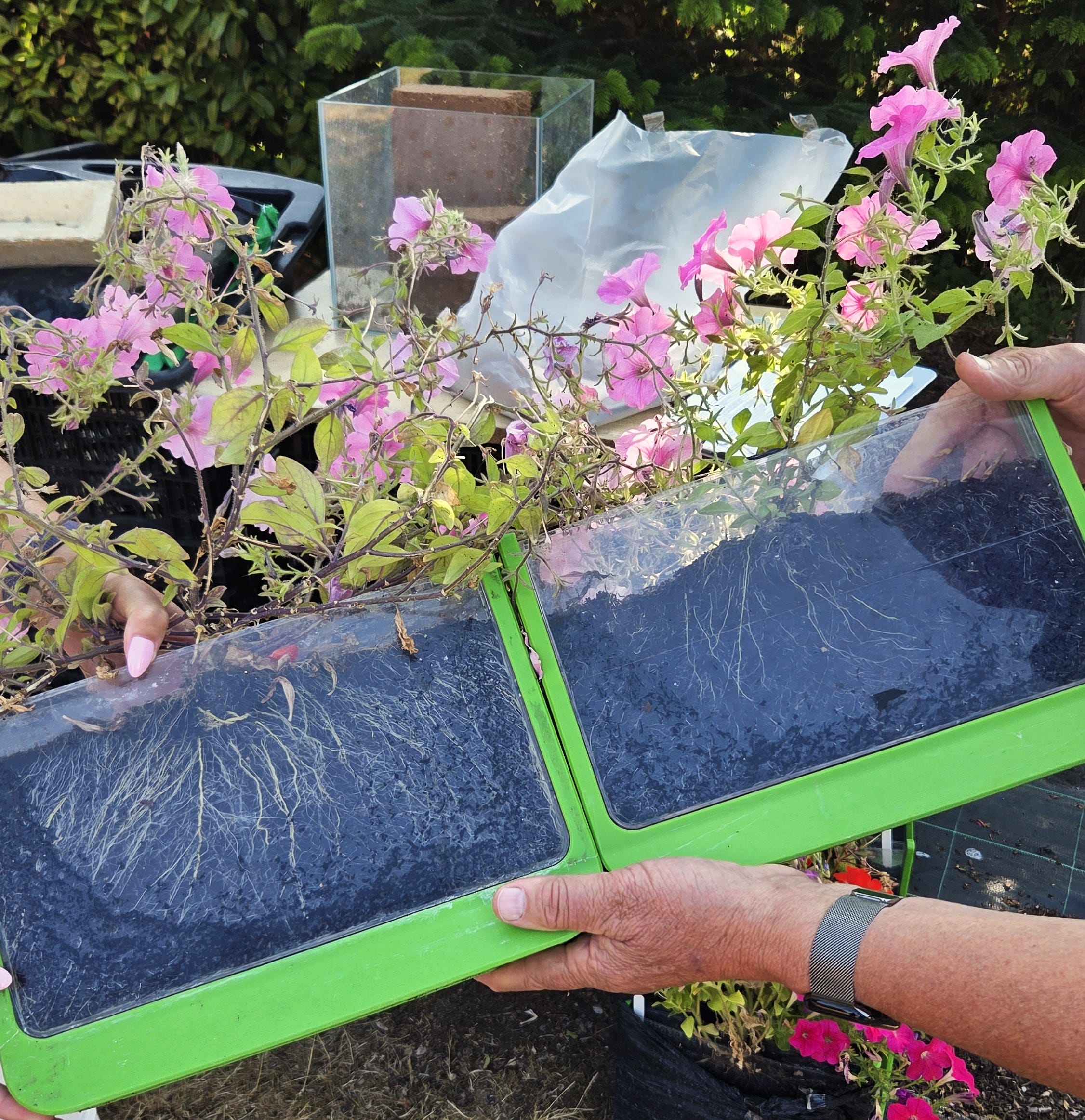
One experimental compost brought to him by another producer performed so poorly in his trials that Paul told its creator exactly what he thought of it!! Months later, the producer apparently thanked him.
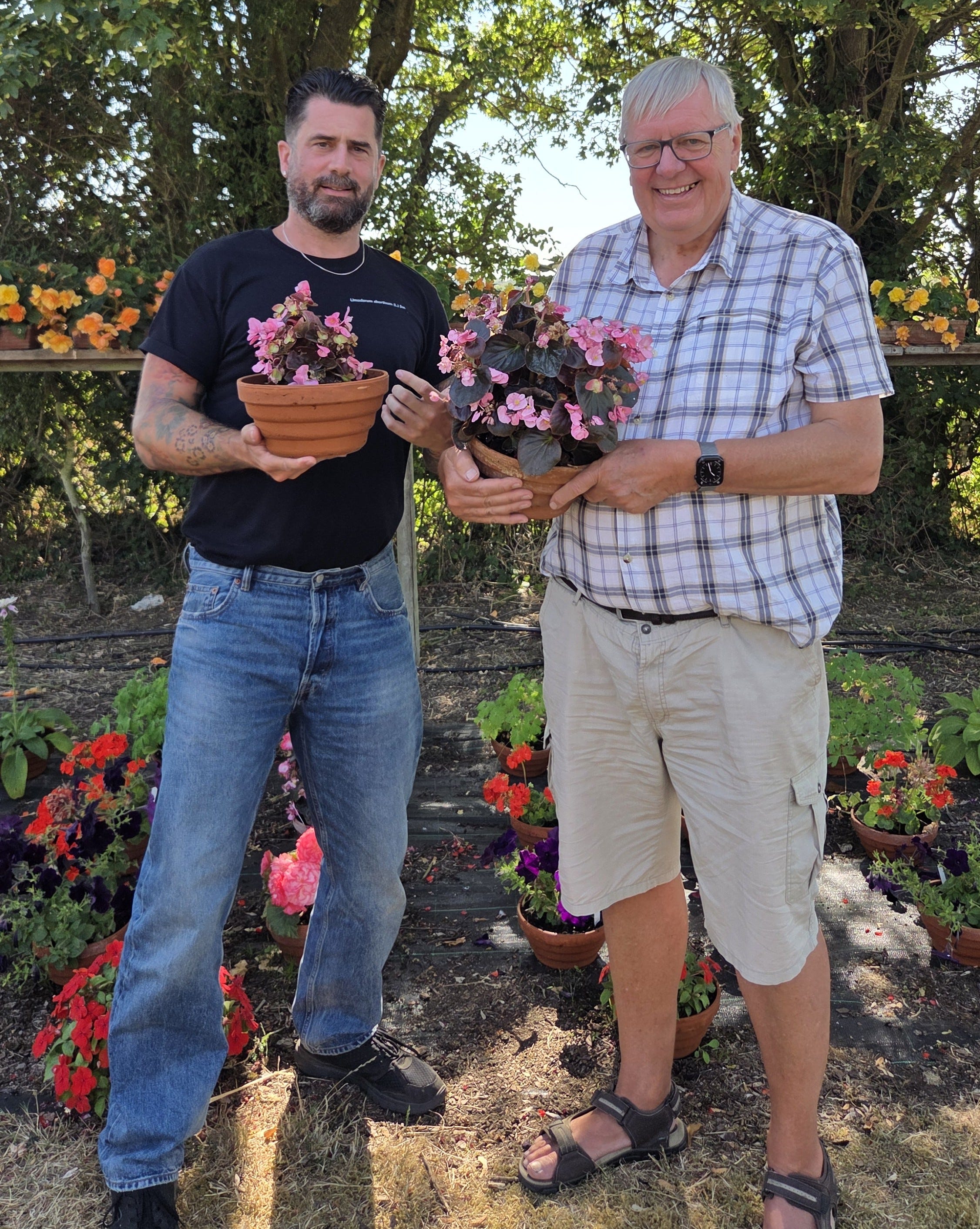
It’s an exchange that sums up a lot about Paul’s approach. He is less interested in whether something sounds good in a sales pitch than whether the plant actually grows well in it. He worries that beginners will see big claims, spend money on compost and plants, get poor results and assume that they’re the problem or that gardening just isn’t for them.
“All I wanted people to do is start gardening, enjoy gardening and keep gardening,” he says.
Keeping it simple
For all the experimentation behind the scenes, Eazy Grow’s consumer proposition is really simple. Paul has considered separate mixes for crops such as tomatoes and petunias, but customer research suggested people preferred one dependable general-purpose product rather than a cupboard full of specialist composts.
However, there are limits to an approach like this: Paul says the standard mix is suitable for many vegetables and other plants, but some more sensitive seedlings require a different formulation because the nutrient level can be too strong. Seed compost, therefore, is another job entirely!
For general use, the compressed format also creates some interesting possibilities. Standard blocks expand to around 35 litres, with larger boxes containing multiple blocks. There is even a smaller version designed to fit through a letterbox, which is useful for gardeners without cars, people living in flats or anyone who doesn’t want to carry a conventional sack of compost home (which is pretty much anyone!)
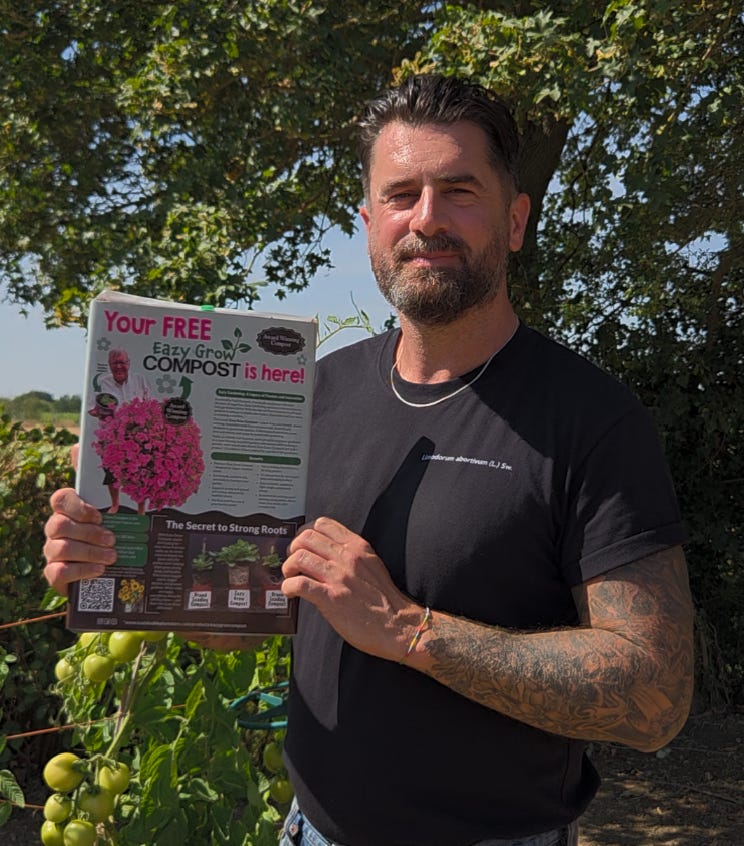
The packaging is straightforward, too, as Paul would rather put money into what is inside the box than expensive printing around it, and says the boxes and bags used for the current range are biodegradable.
What happens next? More trials, probably
Compost could easily be treated as just brown stuff in a bag that’s bought on promotion and rarely thought about again. Paul approaches it from another direction: What size should the particles be? How thoroughly was the coir washed? How evenly is the fertiliser distributed? Can the material be reused? What happens when it dries out? Does adding something actually improve the crop enough to justify what the gardener will eventually pay for it?
There always seems to be another trial running and another question waiting to be answered. I’m looking forward to seeing what the future has in store for Eazy Grow!
I really enjoyed reading this. I’ve always found coconuts fascinating, especially how much can actually be done with something that people often just think of as a food. The part about turning coconut coir into a useful growing medium really caught my attention. It makes you look at the coconut in a completely different way and appreciate how many possibilities there are from one coconut. Really enjoyed this post! https://www.sproutedcoconut.com
I love that stuff. It's bit of a nuisance wetting it but it's easier to store and move around before wetting. And plants seem happy in it.